
Article · September 22, 2025
Why Becoming an AI Generalist Is Your Career Insurance Policy
Explore the rise of AI Generalist roles as companies like Salesforce automate customer interactions and redefine workplace skills.
By Relevant Intelligence
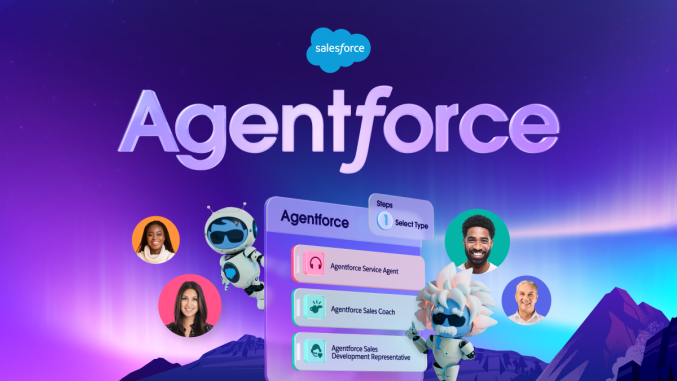
Salesforce recently eliminated approximately 4,000 support roles, replacing much of that work with AI agents through its Agentforce platform. The company now automates nearly half of all customer interactions, with AI resolving simple requests instantly, re-engaging neglected leads, and delivering consistent service at scale.
This shift represents more than operational efficiency. It signals a fundamental change in how businesses operate and what skills remain valuable in the modern workplace.
The Writing on the Wall
Salesforce isn’t alone in this transformation. OpenAI’s recent launch of realtime voice AI technology is revolutionizing call centers across industries. Unlike traditional chatbots that convert speech to text and back again, this technology enables direct voice-to-voice conversations with AI agents that sound remarkably human.
These AI agents can handle complex customer service scenarios, process returns, schedule appointments, and even manage sales calls with natural conversational flow. Early adopters report 60-80% reductions in human agent workload for routine inquiries, with customers often unaware they’re speaking with AI.
The pattern is clear: roles built around repetitive, scripted tasks face increasing automation pressure. However, this creates opportunity for those who understand how to work alongside AI rather than compete against it.
Your Path Forward: The AI Generalist Advantage
The solution isn’t to resist AI but to master it. The most secure career path involves becoming an AI generalist – someone who understands how to apply AI across business functions, recognizes its limitations, and guides its responsible implementation.
Foundation: Build AI Literacy
Start by understanding how large language models (LLMs) function. You don’t need a computer science degree, but you should know that these systems learn from vast text datasets and generate responses based on patterns they’ve identified.
Critical concepts to master:
Effective prompting: Input quality determines output quality. Instead of asking “Write me an email,” provide structure and context: “Draft a professional email introducing our relocation services to a VP of HR, emphasizing cost savings and employee satisfaction metrics.”
Brand consistency: LLMs learn patterns from training data. When you provide examples in your company’s style, they can maintain brand voice. Without guidance, outputs often feel generic and off-brand.
Understanding limitations: AI systems can generate confident but incorrect information. Professional AI use requires knowing when to trust results and when additional validation is necessary.
Advanced Skill: Retrieval-Augmented Generation (RAG)
RAG technology connects LLMs to reliable, current information sources like company documentation, CRM systems, or product catalogs. Rather than relying solely on training data, RAG pulls real-time, domain-specific information to improve accuracy.
Business applications:
• Sales teams ensure AI-generated outreach includes current product information and relevant case studies
• Marketing departments generate campaign copy that aligns with approved brand messaging
• Support organizations provide customers with answers reflecting current policies and procedures
You don’t need to build RAG systems, but understanding their function and benefits is essential for strategic AI implementation.
Emerging Technology: Model Context Protocols (MCPs)
MCPs represent the next evolution in AI capability, enabling language models to interact with external tools and systems. Through MCPs, AI can access customer data from CRMs, check inventory levels, or generate analytics reports within a single conversation.
Real-world impact:
• Sales representatives can ask AI agents for “all open opportunities over $50,000 in healthcare” and receive instant, accurate responses
• Marketing teams can automatically generate audience segments by connecting campaign data with customer profiles
• Support agents can resolve complex tickets requiring multiple system checks, such as order verification and shipment tracking
Understanding MCPs means recognizing that AI is evolving beyond conversation into a comprehensive business system connector.
Practical Implementation Strategies
Sales Applications
Lead qualification: Use AI to analyze inbound inquiries for buying signals and readiness indicators.
Personalized outreach: Generate emails that reflect company brand voice while incorporating individual prospect data and pain points.
Meeting intelligence: Automatically summarize call transcripts to identify action items, concerns, and follow-up opportunities.
Marketing Applications
Content creation: Develop campaign materials that align with brand guidelines, product positioning, and target audience characteristics.
Audience analysis: Leverage AI to identify patterns in customer behavior, industry trends, and purchase history for improved segmentation.
Performance reporting: Generate comprehensive campaign analyses with AI-powered insights on performance drivers and optimization opportunities.
Customer Support Applications
Automated resolution: Handle routine requests like password resets, order status inquiries, and basic troubleshooting without human intervention.
Agent assistance: Provide real-time answer suggestions to human agents, reducing resolution time and improving consistency.
Voice automation: Deploy conversational AI for overflow calls and after-hours support, maintaining service quality around the clock.
Strategic Leadership Development
The highest-value AI generalists evolve from users to organizational advisors. This transition requires developing expertise in strategic AI implementation:
Risk assessment: Identify where AI adds genuine value versus where it introduces unnecessary complexity or risk.
Governance frameworks: Establish guardrails protecting brand integrity, data privacy, and regulatory compliance.
Success metrics: Define meaningful measurements beyond cost savings, including customer satisfaction, employee efficiency, and revenue impact.
Change management: Guide teams through AI adoption while maintaining productivity and morale.
The Competitive Advantage
Salesforce’s workforce transformation isn’t an isolated event. It represents the beginning of widespread AI integration across industries. Organizations implementing voice AI, automated customer service, and intelligent lead qualification are gaining significant operational advantages.
The professionals who thrive in this environment will be those who understand how to maximize AI capabilities while providing the human judgment, creativity, and strategic thinking that AI cannot replicate.
Taking Action
The transformation is already underway. Rather than hoping your role remains unchanged, take proactive steps:
- Start learning immediately: Begin with basic AI literacy and gradually build more sophisticated skills
- Apply knowledge practically: Use AI tools in your current role to understand their capabilities and limitations
- Share insights: Become the go-to person in your organization for AI-related questions and strategies
- Think strategically: Develop opinions on how AI should be implemented responsibly in your industry
AI isn’t eliminating all jobs, but it is fundamentally changing them. The professionals who understand how to harness AI capabilities while providing uniquely human value will always find opportunities in the evolving marketplace.
The question isn’t whether AI will impact your career. It’s whether you’ll be ready to leverage that impact for your advantage.
Working through a problem like this?
Problem Discovery starts with an outside-in read of your public business footprint, then a conversation to validate what is actually happening inside.
Start Problem Discovery