
Article · August 31, 2025
Palantir’s $10 Billion U.S. Army Enterprise Agreement and the Global Surge in Military AI Spending
Palantir's 10-billion U.S. Army Enterprise agreement and the global surge in military ai spending. It appears we have a global AI race.
By Relevant Intelligence
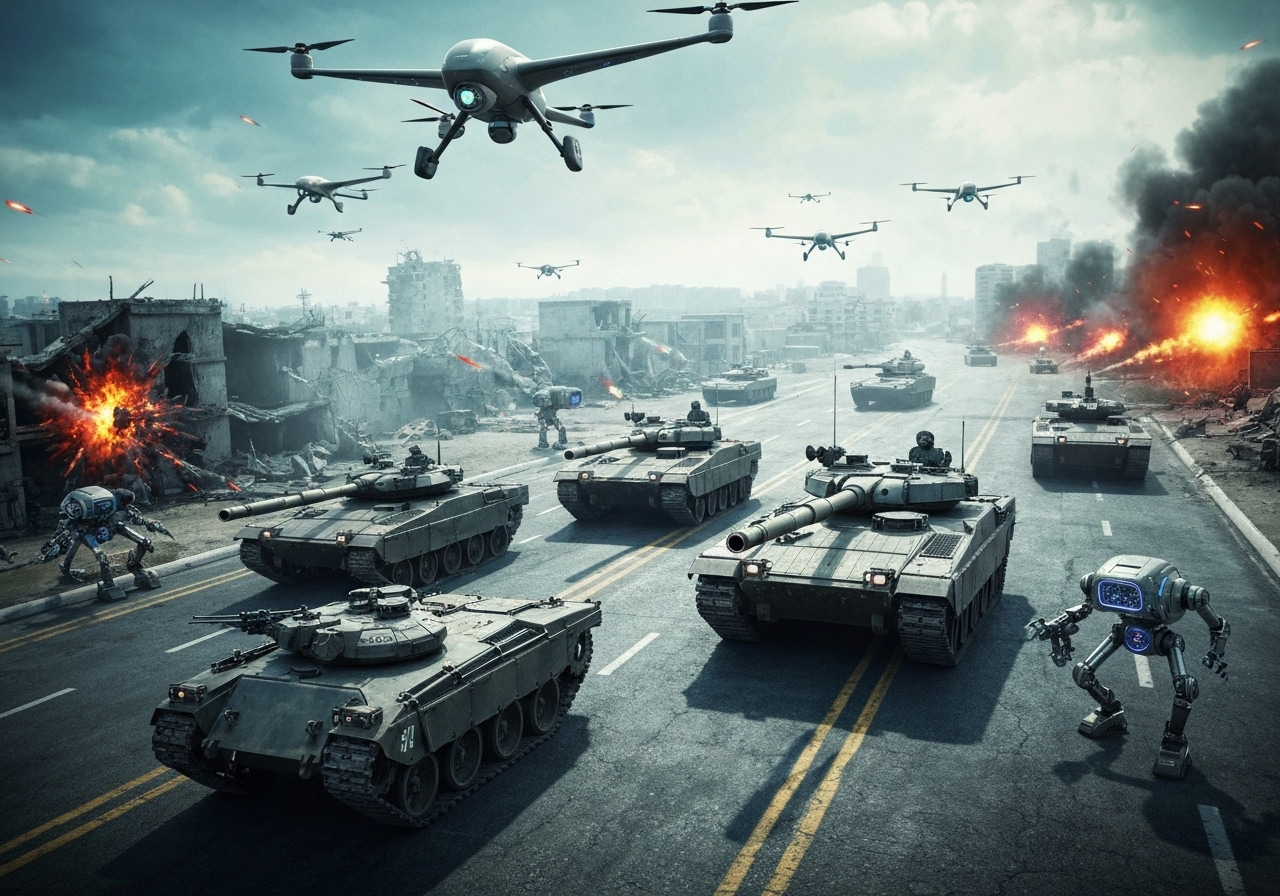
Palantir Technologies has secured a milestone agreement with the U.S. Army, an Enterprise Agreement valued at up to $10 billion over ten years. This deal consolidates 75 existing contracts, easing procurement bottlenecks and enabling streamlined acquisition of Palantir’s AI-driven tools across the Army and wider Department of Defense. Analysts describe the company as being “in the sweet spot” as federal AI investment continues to rise.
Building Toward Data-Driven Defense Transformation: Palantir’s platforms, including Apollo, Gotham, and Foundry, are central to the Pentagon’s software modernization efforts under initiatives such as the Software Acquisition Pathway. The Maven Smart System, another Palantir-led AI effort, grew to nearly $1.3 billion, reflecting the military’s increasing reliance on advanced analytics and AI capabilities.
A Global Snapshot: How Nations Are Elevating AI in Defense
Military Spending is Soaring. Global defense outlays reached a historic high of $2.718 trillion in 2024, marking the tenth consecutive annual increase.
The U.S., China, Russia, Germany, and India together accounted for 60 percent of that spending. The U.S. alone accounted for roughly $997 billion of that total.
China’s spending was estimated at $314 billion.
Russia rose to $149 billion, equal to 7.1 percent of its GDP.
Charting the AI Defense Race The U.S., China, and Russia are widely seen as the top-tier contributors in military AI systems. U.S. annual AI sector defense spending hovers near $2 billion, with an additional $1.7–3.5 billion for unmanned systems.
China invests heavily in practical AI applications for military domains, including situational awareness, unmanned platforms, and command automation.
India is accelerating AI adoption, with over ₹1,000 crore (~$121 million) earmarked annually for AI defense initiatives through 2026. Programs include AI-enabled drones, surveillance systems, unmanned vehicles, and AI command centers.
Europe’s Defense Modernization: Europe is also stepping up. The Readiness 2030 initiative aims to mobilize up to €800 billion in defense capabilities across the EU to address strategic threats. Individual European nations are increasing their budgets:
Belgium aims to boost defense spending to 2 percent of GDP in 2025
Denmark is raising spending to 3 percent through a 50 billion krone fund, the country’s highest level in 50 years
As of 2024, the EU average defense spending is 1.6 percent of GDP, with Ukraine standing out at more than 34 percent of GDP
The Takeaways: What This Means for Defense Tech and Policy
Major shift in procurement: Palantir’s Enterprise Agreement signals a strategic pivot to integrated, scalable military software acquisition.
AI as a front-line priority: Countries are investing heavily in AI and autonomy, not just hardware, for future readiness.
Global AI arms competition: Major powers like China and India are rapidly expanding military AI capabilities.
Europe answering the call: EU defense solidarity and increased budgets reflect the escalating AI-enabled security landscape.
Industry opportunity: Defense tech firms that align with AI, autonomy, and data analytics stand to benefit globally.
Strategic Implications for Business Leaders: The convergence of AI and defense spending represents more than military modernization; it signals a fundamental shift in how nations view technological superiority as a national security priority.
For business leaders, this trend indicates That Supply Chain Considerations Are Essential: defense contractors and their suppliers should prepare for increased demand for AI-enabled systems, cybersecurity, and autonomous technologies.
Talent Competition: The military’s push into AI will intensify competition for skilled AI engineers, data scientists, and cybersecurity professionals.
Regulatory Environment: As military AI applications expand, expect stricter regulations around AI exports, data security, and dual-use technologies.
Investment Opportunities: The $2.7 trillion global defense market increasingly prioritizes AI and autonomous systems, creating opportunities for companies that can bridge commercial AI innovation with defense requirements.
Sources: – Reuters – US Army pools contracts into up to $10 billion Palantir deal – Barron’s – Palantir Won a Big Army Pact. The AI Firm Is ‘in the Sweet Spot’ – Washington Post – Palantir’s $10B Army contract and Maven expansion – SIPRI Military Expenditure Report 2024 – CIGI – Militarizing AI and U.S. spending estimates – Quartz – Countries scaling up AI in the military – Wikipedia – Artificial Intelligence Arms Race – Wikipedia – Readiness 2030 European Defense Plan – Wikipedia – List of Countries in Europe by Military Expenditures
Working through a problem like this?
Problem Discovery starts with an outside-in read of your public business footprint, then a conversation to validate what is actually happening inside.
Start Problem Discovery