
Article · September 15, 2025
Google’s AI Revolution: Why Your Marketing Strategy Is Already Obsolete
Explore Google's AI Revolution and learn how it reshapes the future of digital marketing and user searches.
By Relevant Intelligence
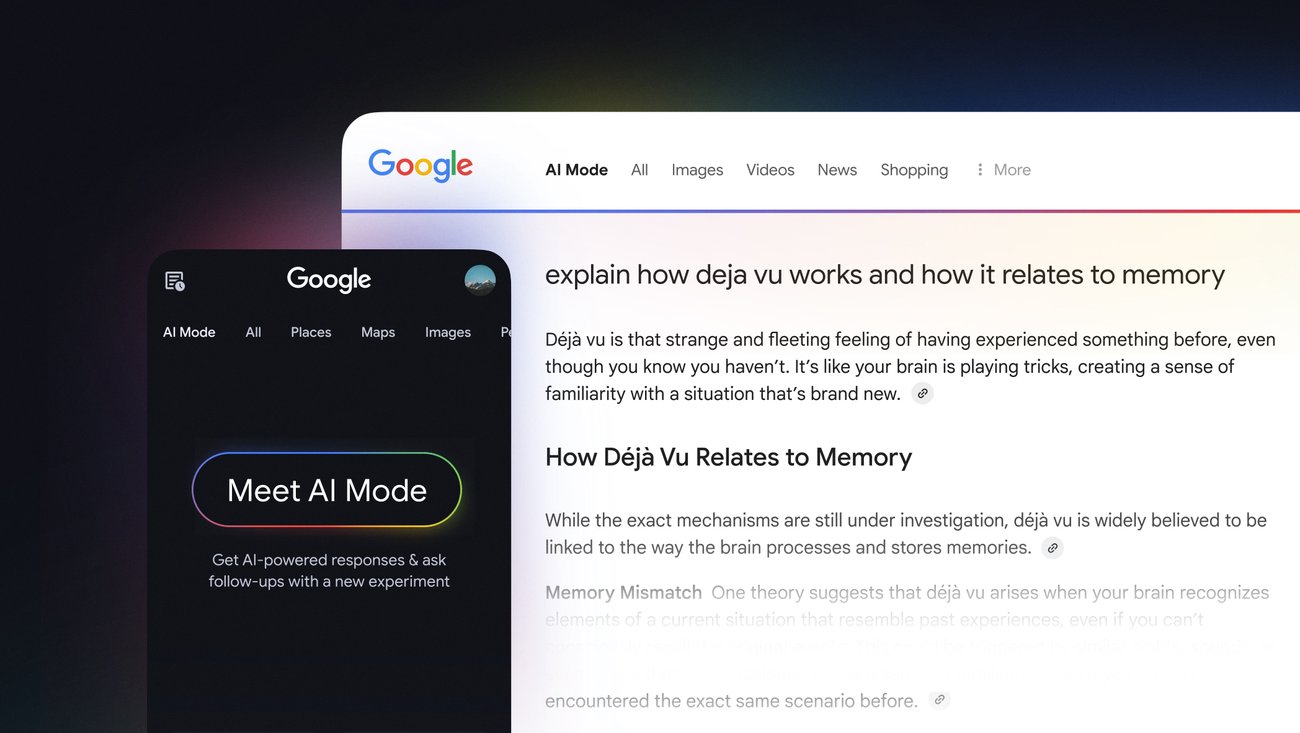
Your competitors are already using AI search. Here’s what they know that you don’t. Google just killed the search model that made them $200 billion last year. On purpose. After watching ChatGPT grab 700 million users in three years, Google made a choice. They’re betting everything on AI. Not tweaking it. Not testing it. Going all in. Here’s the problem for your business: The rules you learned about digital marketing no longer work. Keywords are dead. Clicks are optional. And if you’re still optimizing for “10 blue links,” you’re already losing customers to competitors who figured this out.
The $200 Billion Decision That Changes Everything
For 25 years, Google’s business was simple. You search. They show links. You click ads. They make money. Last year alone, this model generated over $200 billion. Now they’re destroying it. AI Mode is live across the US. AI Overviews reach 1.5 billion users monthly. And Google is embedding ads directly into AI conversations. No clicks required. What killed the old model: • Users spend 5-10 minutes in AI conversations instead of 30 seconds clicking links • Questions are 2-3 times longer than traditional searches • 88% of AI-triggered queries are informational—people want answers, not websites • Zero-click searches are becoming the norm, not the exception The real shift: Google discovered keeping users on their platform generates more data, better targeting, and ultimately more revenue than sending them away.
Your Keywords Are Worthless Now
Remember spending hours on keyword research? Finding that perfect long-tail phrase with high volume and low competition? That strategy is dead. Google’s AI doesn’t search for keywords anymore. It has conversations. When someone types “I need accounting software,” the AI doesn’t match keywords. It understands context. Old search: “accounting software small business” New search: “I run a 15-person marketing agency and our current accounting system can’t handle project billing or integrate with our CRM. What should I use?” The AI breaks this into multiple searches simultaneously: • Agency accounting requirements • Project billing solutions • CRM integration options • Company size considerations • Industry-specific needs Then it synthesizes everything into one answer. Your perfectly optimized keyword page never gets seen.
The Brand Profile That Controls Your Visibility
Here’s what most businesses don’t know: Google’s AI is building a profile of your company right now. Not from your website. From everything. Google analyzes: • Every customer review across all platforms • Your social media engagement rates • Website user behavior metrics • Email response times • Support ticket resolution rates • Employee LinkedIn profiles • News mentions • Forum discussions This profile determines whether you appear in AI responses. Not your bid. Not your keywords. Your entire digital presence. One client discovered their outdated YouTube channel was killing their AI visibility. The channel had 50 videos from 2019 with comments turned off. Google’s AI interpreted this as an abandoned brand. Their ads stopped showing in AI Mode conversations. Fixing this one issue increased their AI visibility by 40%.
Why Your Google Ads Account Is Now an AI Trainer
Your Google Ads account isn’t an advertising platform anymore. It’s an AI training system. Every conversion you track teaches Google’s AI what your ideal customer looks like. Import the wrong data? The AI learns wrong. Track vanity metrics? The AI optimizes for worthless leads. A real example: An HVAC company was tracking form fills as conversions. Seemed logical. But 70% of forms were tire-kickers wanting free quotes with no intent to buy. The AI learned to find more tire-kickers. Their cost per actual sale quadrupled. They switched to tracking only completed jobs over $2,000. Within 6 weeks, the AI learned to find serious buyers. Cost per sale dropped 60%. Critical changes you must make: • Stop tracking micro-conversions (newsletter signups, PDF downloads) • Import your actual sales data, including customer lifetime value • Use enhanced conversions to feed the AI quality signals • Set up proper value tracking for different customer types
The Three Scenarios That Determine Your Survival
Based on current data, here’s what happens next: Scenario 1: The Gradual Shift (Most Likely) • Your organic traffic drops 15-25% over 6 months • AI Mode captures informational queries first • Transactional searches remain relatively stable • You have time to adapt, but not much Scenario 2: The Avalanche • Traffic drops 40-60% within 3 months • AI Overviews expand to transactional queries • Direct website visits become rare • Only brands with strong AI presence survive Scenario 3: The Hybrid Reality • Google maintains balance between AI and traditional results • Specialized content still drives traffic • AI becomes a discovery layer, not replacement • Smart brands thrive in both worlds Current data suggests Scenario 1 is happening now. Italy saw 30-40% traffic drops for generalist sites, but specialist content grew 15-45%. The pattern is clear: AI rewards expertise, punishes generality.
Your 90-Day Survival Plan
Stop what you’re doing with SEO. It’s not working anymore. Here’s what actually works: Week 1-2: Audit Your AI Presence 1. Search for your brand in AI Mode. What appears? 2. Check your Google Business Profile. Is every field completed? 3. Analyze your reviews. Are recent ones positive and detailed? 4. Test your main products/services in ChatGPT. Do you appear? Week 3-4: Fix Your Data 1. Clean your product feeds. Remove outdated items. 2. Rewrite product descriptions as answers to questions. 3. Set up proper conversion tracking with real values. 4. Import customer match lists to train the AI. Week 5-8: Launch AI-Optimized Campaigns 1. Start Performance Max campaigns (they show in AI Mode) 2. Use broad match with smart bidding (let AI find intent) 3. Create conversation-based ad copy 4. Test value-based bidding strategies Week 9-12: Scale What Works 1. Double down on campaigns showing in AI conversations 2. Create content that answers complex questions 3. Build topical authority through comprehensive guides 4. Monitor AI visibility weekly, not daily
The Brutal Truth About What’s Coming
Most digital marketing agencies won’t survive this shift. They’re still selling keyword research and link building. Their clients will fire them when traffic craters. SEO specialists who don’t adapt will become obsolete. The companies clinging to old strategies will watch competitors steal their customers through AI conversations they’re not part of. But here’s the opportunity: While everyone else panics about losing traffic, smart businesses are positioning themselves as the AI’s preferred answer. They’re training Google’s AI to recognize them as the solution to specific problems.
What This Means for Your Business
You have two choices: Option 1: Keep doing what you’re doing. Watch your traffic decline. Blame Google. Go out of business. Option 2: Accept that search has fundamentally changed. Adapt now. Dominate your market while competitors struggle to understand what happened. The businesses thriving in AI search share three characteristics: 1. They solve specific problems, not general needs 2. They provide detailed, expert information 3. They maintain consistent quality signals across all platforms
Your Next Move
The transition to AI search isn’t coming. It’s here. AI Mode is live. AI Overviews reach 1.5 billion users. Your customers are having conversations with Google’s AI right now. Are you part of those conversations? Every day you wait, your competitors get better at training Google’s AI. They’re building their brand profiles. They’re optimizing for conversations. They’re capturing your customers. The question isn’t whether to adapt to AI search. The question is whether you’ll adapt fast enough to survive.
Working through a problem like this?
Problem Discovery starts with an outside-in read of your public business footprint, then a conversation to validate what is actually happening inside.
Start Problem Discovery